
Critical Thinking Test
A timed test of spotting hidden assumptions, evaluating arguments, interpreting evidence and recognizing logical fallacies in work and study situations.
- 20 min
- 15
- Intermediate
- Timed
About this assessment
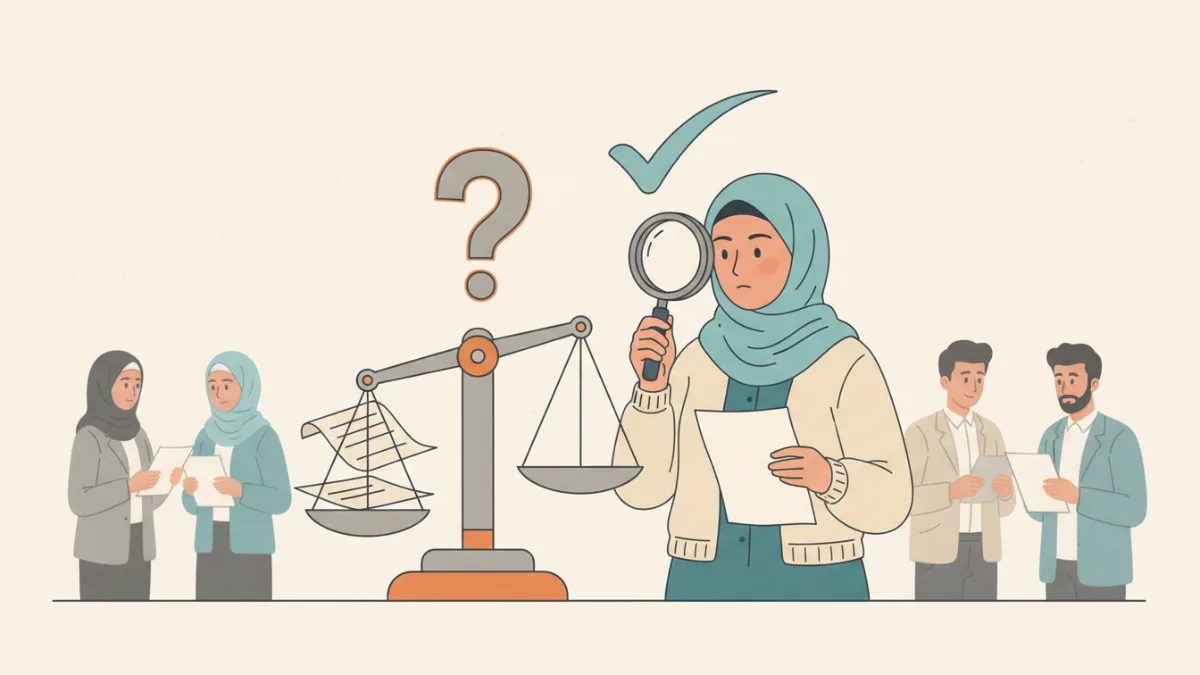
Critical thinking means examining an argument before accepting it: what does it assume without saying so, does the evidence really support the conclusion, and where does the reasoning go wrong? Many employers measure this skill with tests such as Watson-Glaser, because good decisions at work depend on it.
This test has 15 questions in four areas: spotting assumptions, evaluating arguments, interpreting evidence and data, and recognizing logical fallacies. In every question, rely only on the information given, not on what you know or think about the topic.
Your result is a practice indicator. When you finish, you can review every question with an explanation of the correct answer.
What it measures
- Spotting unstated assumptions in an argument
- Telling what strengthens an argument from what weakens it
- Distinguishing correlation from causation
- Judging the quality of samples and sources
- Recognizing common logical fallacies
What your results tell you
- Your overall critical thinking score
- How you did in each of the four areas
- The kinds of mistakes that recur in your answers
- Courses and practical steps to strengthen your weakest area
Why it helps
- Prepare for critical thinking tests used by employers and graduate programs
- Make better decisions at work and in your studies
- Assess news, statistics and advertising more carefully
- Build stronger arguments in interviews, essays and scholarship applications
Areas covered
Spotting assumptions
Identifying what must be true for an argument to hold, even though the speaker never says it.
Evaluating arguments
Judging how strong an argument is, which information strengthens or weakens it, and how reliable a source is.
Interpreting evidence
Concluding only what the data actually supports, without confusing correlation with causation or generalizing from an unrepresentative sample.
Recognizing fallacies
Recognizing common patterns of faulty reasoning, such as attacking the person, hasty generalization and false choices.
Result levels
- 1Developing
You answered fewer than 40% correctly. This often happens when you rely on your own view of the topic instead of the information given, or accept a conclusion because it sounds reasonable. Go through each explanation and practice asking: what exactly is the evidence for this?
- 2Average
You handle straightforward arguments well, but items that need an alternative explanation or attention to an unrepresentative sample still cost you points. Focus on the weakest area in your report.
- 3Strong
You examine arguments carefully and catch most assumptions and fallacies. You are ready for many employer critical thinking tests. Review the questions you missed to see which kind of argument trips you up.
- 4Excellent
You assess arguments and evidence precisely and do not go beyond what the information allows. This skill is valued in analysis, research, consulting and law; build on it by reading real studies and critiquing their methods.
Sample question
One of the questions in this test. The right answer and an explanation are in your report after you finish.
A sales director says: "Our sales fell this month, so we need to hire a new marketing manager."
- That competitors cut their prices this month
- That the drop in sales was caused by weak marketing
- That the current marketing manager wants to leave
- That sales will keep falling every month
Frequently asked questions
- Is the Critical Thinking assessment free?
- Yes. It is free, and so is the full report. You only need a free For9a account so your answers and result are saved.
- How long does it take?
- About 20 minutes, with 15 questions. It is timed: you have 20 minutes once you start, and it is scored automatically when the time runs out.
- How is it scored?
- Each question has one correct answer (or a set of correct answers). Your score is the share of questions you answer correctly, and it is also broken down by skill area so you can see where you are strong and what to practise.
- What does my result mean?
- It shows how well you know the material today, your level, and the areas to work on, with courses and opportunities that match. Use it to plan your learning, not as a final judgement.
- Is the result an official certificate or diagnosis?
- No. For9a assessments are guidance and self-development tools. They are not an official certificate, a psychological or medical diagnosis, or a replacement for an exam required by a university or employer.
- Can I take it again?
- Yes, 24 hours after your last attempt, so you have time to review your answers and practise.
- Can I stop and continue later?
- No. Once you start, the timer keeps running even if you leave the page.
These assessments are guidance and self-development tools, not a psychological diagnosis or an official certificate.
Last updated 29 November 2026How we build and score these assessmentsEditorial policy