
Emotional Intelligence Test
Find out how well you understand and manage your emotions, stay motivated, read others and build good relationships.
- 9 min
- 20
- Beginner
About this assessment
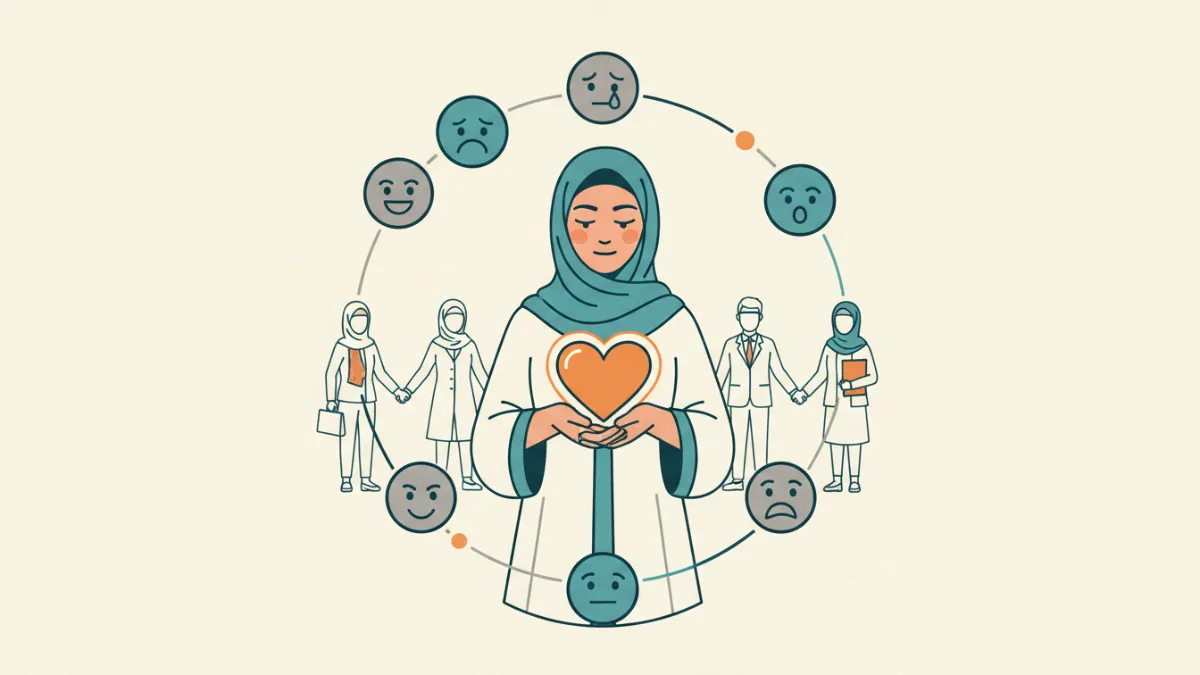
Emotional intelligence is your ability to handle emotions, your own and those of people around you, in a way that serves your goals and relationships. It shapes how you deal with pressure, rejection and disagreement, and how well you work with and lead others.
This assessment covers five areas: self-awareness, self-regulation, motivation, empathy and social skills, through statements you rate yourself on and situations from study and work. It is a tool for self-reflection, not a diagnostic psychological test.
The good news is that emotional intelligence can be developed with practice. You will get practical exercises for each area that needs work.
What it measures
- Self-awareness
- Self-regulation under pressure
- Motivation and persistence
- Empathy
- Social skills and building relationships
What your results tell you
- Your overall emotional intelligence level
- Your five areas ranked from strongest to weakest
- A practical exercise for each area that needs work
- Courses and opportunities that fit your result
Why it helps
- Understand how your emotions affect your decisions and relationships
- Spot the situations where you lose control of your reactions
- Improve how you deal with colleagues, managers and clients
- Get practical exercises to develop each area
Areas covered
Self-awareness
Your ability to recognize your emotions, what causes them and how they affect your behavior.
Self-regulation
Your ability to manage your reactions and stay composed in difficult situations.
Motivation
Your ability to keep working toward your goals from inner drive despite obstacles and setbacks.
Empathy
Your ability to understand others' feelings and circumstances and respond with care.
Social skills
Your ability to build and maintain relationships and handle tensions between people wisely.
Result levels
- 1Emerging
Your emotions often drive your reactions, or you find it hard to read how others feel. Start with the daily emotion log exercise; it is the base the other areas build on.
- 2Developing
You are aware in some areas and struggle in others, especially under pressure. Focus on your weakest area and practice its exercise for two weeks.
- 3Competent
You handle your own and others' emotions well in most situations. Polishing the weaker areas will make you more effective in teams and tough moments.
- 4High
You manage your emotions and relationships with clear maturity. This is a strong advantage in leadership, people-facing and mentoring roles, so use it to support those around you.
Sample question
One of the statements in this assessment. There are no right or wrong answers: choose what fits you best.
- Strongly disagree
- Disagree
- Neutral
- Agree
- Strongly agree
Frequently asked questions
- Is the Emotional Intelligence assessment free?
- Yes. It is free, and so is the full report. You only need a free For9a account so your answers and result are saved.
- How long does it take?
- About 9 minutes, with 20 questions.
- How is it scored?
- You rate statements about your habits and situation. Some are worded in reverse so agreeing with everything does not inflate the result. Each area gets a percentage, and the total places you in a readiness level.
- What does my result mean?
- It shows how prepared you are now, your strongest areas and the ones that need attention, with practical next steps.
- Is the result an official certificate or diagnosis?
- No. For9a assessments are guidance and self-development tools. They are not an official certificate, a psychological or medical diagnosis, or a replacement for an exam required by a university or employer.
- Can I take it again?
- Yes, whenever you like. Your earlier results stay in your history so you can compare.
- Can I stop and continue later?
- Yes. Your answers are saved as you go, so you can close the page and continue from where you stopped.
These assessments are guidance and self-development tools, not a psychological diagnosis or an official certificate.
Last updated 29 November 2026How we build and score these assessmentsEditorial policy