
Free Online Course titled “COVID-19: How to Put on and Remove Personal Protective Equipment” from the World Health Organization
This course is a guide for healthcare workers involved in patient care activities in a healthcare setting.
- Arabic
- With Certificate

Tutor Name
World Health Organization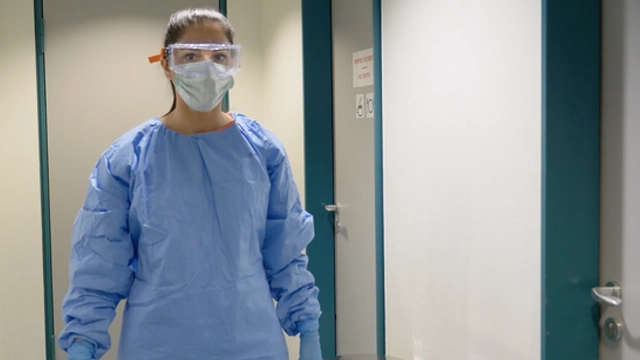
About the Course
The World Health Organization (WHO) is offering a free online course titled “COVID-19: How to put on and remove personal protective equipment (PPE)”. This course is a guide for healthcare workers involved in patient care activities in a healthcare setting. It aims to show the type of personal protective equipment or PPE needed to correctly protect oneself.
Overview:-
- Based on the current available evidence, the WHO recommended PPE for the care of COVID patients are contact and droplet precautions, with the exception of aerosol producing procedures, which require contact and airborne (hence, a respirator mask such as N95, FFP2, FFP3).
- Keeping in mind, PPE is part of a larger infection prevention and control bundle of measures and should be implemented as part of a multimodal strategy of management of COVID-19 patients. Only clinical staff who are trained and competent in the use of PPE should be allowed to enter the patient’s room.
- The course duration is approximately 15 minutes.
Learning Objectives:-
By the end of this course, participants should be able to:
- Demonstrate the correct way to put on and remove PPE.
- Demonstrate the correct way to perform hand hygiene with an alcohol-based hand rub (ABHR), According to the WHO-recommended method.
Course Contents:-
Module 1: How-to-guide for putting on and removing PPE according to droplet/contact precautions for COVID-19:
This module offers a video how-to-guide on putting on and removing PPE according to droplet/contact precautions for COVID-19, as well as two poster resources.
By the end of this module, participants should be able to demonstrate the correct way to put on personal protective equipment according to the WHO-recommended method for COVID-19 droplet/contact precautions.
Module 2: How-to-guide for putting on and removing PPE according to airborne/contact precautions for COVID-19 aerosol generating procedures:
This module offers a video how-to-guide on putting on and removing PPE according to airborne/contact precautions for COVID-19.
By the end of this module, participants should be able to demonstrate the correct way to put on personal protective equipment according to the WHO-recommended method for COVID-19 airborne/contact precautions.
Certificate:-
A Confirmation of Participation is available to participants who complete 100% of the course material.
About WHO:-
The World Health Organization is a specialized agency of the United Nations responsible for international public health. The WHO Constitution, which establishes the agency's governing structure and principles, states its main objective as the attainment by all peoples of the highest possible level of health. Working with 194 Member States, across six regions, and from more than 150 offices, WHO staff are united in a shared commitment to achieve better health for everyone, everywhere. The WHO helps mothers and children survive and thrive so they can look forward to a healthy old age and ensures the safety of the air people breathe, the food they eat, the water they drink – and the medicines and vaccines they need.
See more available bachelor scholarships on For9a
See more available jobs on For9a
Taught by

The organization's goal is to build a better, healthier future for people all over the world. Working through offices in more than 150 countries, WHO staff work side by side with governments and other partners to ensure the highest attainable level of health for all people. They strive to combat diseases; infectious diseases like influenza and HIV and noncommunicable ones like cancer and heart disease. They also help mothers and children survive and thrive so they can look forward to a healthy old age, and ensure the safety of the air people breathe, the food they eat, the water they drink, and the medicines and vaccines they need.
Read more.