
Free Online Course by FutureLearn on Forensic Archaeology and Anthropology
Enter the fascinating world of forensics, and learn how the deceased are located, recovered and analysed using DNA and pathology.
- English
- With Certificate

Tutor Name
Future Learn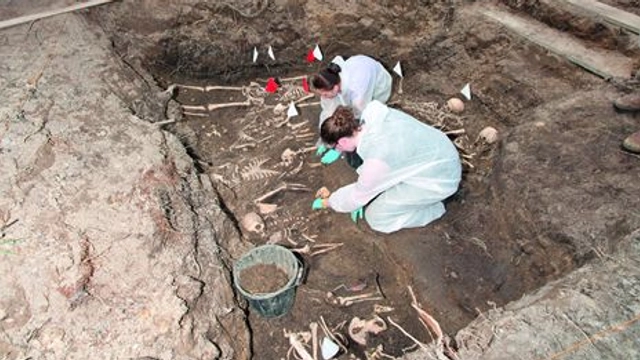
About the Course
A free online course is available at Future Learn Platform, on Forensic Archaeology and Anthropology.
Course background:
The location, exhumation and identification of the dead requires highly specialised expertise. On this course, you’ll learn the latest scientific techniques for body location, recovery and analysis.
Through a series of real-life case studies, video lab sessions, interactive 3D models, photographs and podcasts, you’ll explore key forensic techniques.
You’ll learn how to locate gravesites, excavate human remains, and determine factors like sex and age-at-death from the skeleton. You will also understand how to identify pathology on the skeleton, and be introduced to DNA analysis.
Who can take this course:
- This course is suitable for anyone intrigued by forensic archaeology and anthropology.
- The course is specifically designed for forensic, crime scene, and police practitioners who require training in anthropological and archaeological techniques. It has been co-developed with the International Committee of the Red Cross, an organisation that undertakes humanitarian forensic action around the world.
- It will be useful for undergraduate forensics students or those interested in studying forensic archaeology and anthropology at university.
- It may also be useful to those working in legal and human rights contexts who require an understanding of forensic methods.
Course duration:
3 hours per week for 6 weeks.
Course Topics:
- Body location and recovery in forensic contexts.
- Osteoprofiling (skeletal analysis of sex, age-at-death, stature).
- Identification of pathology and trauma.
- Latest developments in biomolecular techniques.
- Taphonomic processes (decomposition and commingling of human remains).
- Forensic case studies (e.g. post-conflict regions, mass disasters).
Course objectives:
By the end of the course, learner will be able to:
- Explore the application of archaeology and anthropology to different forensic contexts
- Develop knowledge of the latest methods in forensic archaeology and anthropology
- Compare the roles of different forensic specialists
- Interpret the post-mortem changes to the human body in differing contexts
- Describe a range of forensic case studies
- Evaluate the potentials and limitations of the scientific methods used to locate and recover human remains in forensic contexts
- Investigate the different scientific techniques used to identify deceased individuals from skeletal remains and establish cause of death
- Reflect on learning gained throughout the course, including the latest research, and how this can be applied to modern forensic and archaeological contexts.
Course costs:
- Learner can join this course for free and get access to it for 8 weeks.
- Or upgrade this course for $79 and gets:
- Access to this course for as long as it’s on Future Learn.
- Access to this course’s tests as well as a print and digital Certificate of Achievement once he/she is eligible.
- Or buy unlimited for $249.99 for one year and gets:
- Access to this course, and hundreds of other FutureLearn short courses and tests for a year.
- A printable digital Certificate of Achievement on all short courses once they are eligible.
- The freedom to keep access to any course he/she has achieved a digital Certificate of Achievement on, for as long as the course exists on Future Learn.
- The flexibility to complete own choice of short courses in learner’s own time within the year.
See more available workshops or trainings on For9a
See more available opportunities in Germany on For9a
Taught by

They offer a diverse selection of courses from leading universities and cultural institutions from around the world. These are delivered one step at a time and are accessible on mobile, tablet, and desktop, so you can fit learning around your life. Also, they believe learning should be an enjoyable, social experience, so their courses offer the opportunity to discuss what you’re learning with others as you go, helping you make fresh discoveries and form new ideas.
Read more.